
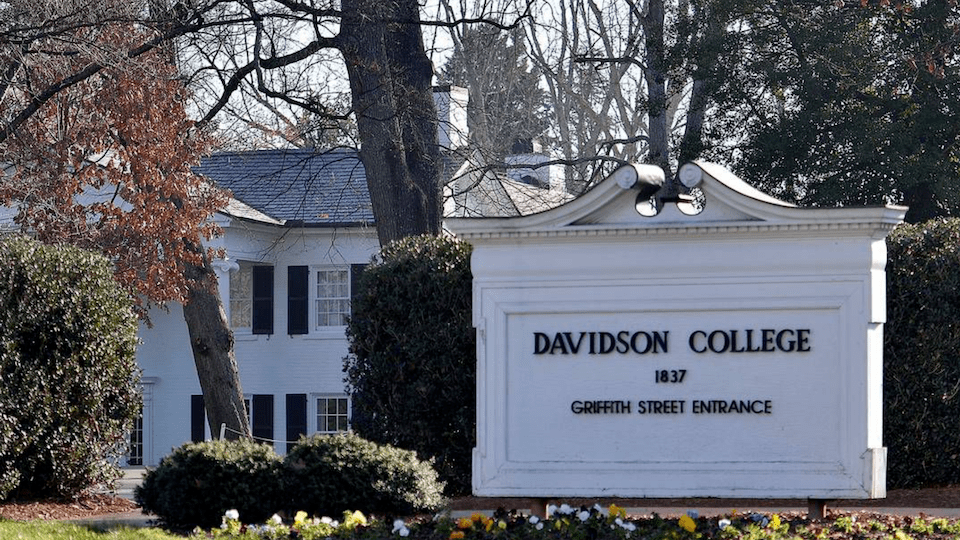
April 21, 2025, by Dean Hoke: With this profile of Davidson College, I complete the tenth and final entry in my series exploring small colleges across the United States. This journey has deepened my appreciation for the distinct contributions and lasting impact of these diverse institutions. Collectively, these colleges have further strengthened my belief in the diversity, resilience, and enduring importance of American higher education — and reaffirmed the vital role that small colleges continue to play in communities across the country.
Background
Founded in 1837 by Presbyterian leaders, Davidson College is a private liberal arts college located in Davidson, North Carolina, just north of Charlotte. Named after Revolutionary War hero General William Lee Davidson, the college embraces a strong tradition of academic excellence and service. Although it maintains historical ties to the Presbyterian Church (USA), Davidson welcomes students of all faiths and backgrounds. A hallmark of Davidson’s culture is its student-run Honor Code, fostering a climate of trust and integrity. With about 2,000 undergraduates, Davidson remains committed to developing “humane instincts and disciplined, creative minds” through a personalized liberal arts education steeped in tradition, yet responsive to the challenges of a changing world.
Curricula
Davidson College offers a broad and rigorous liberal arts education, exclusively focused on undergraduate learning. Students choose from 37 majors and 39 minors, ranging from traditional fields like English, History, and Biology to interdisciplinary studies like Data Science and Environmental Studies. Through the Center for Interdisciplinary Studies, students can even create personalized majors. All students must complete a comprehensive general education program, emphasizing writing, critical thinking, and exposure to diverse disciplines.
Davidson has an 8:1 student-faculty ratio, which promotes mentorship and in-depth discussion. Faculty, all holding terminal degrees, foster an environment that encourages original research and creative work. Davidson emphasizes experiential learning, with over 70% of students studying abroad and many engaging in faculty-mentored research or community-based projects. Signature programs include the Center for Civic Engagement and Humanities Seminars. The college’s academic culture, shaped by its Honor Code, blends classic liberal arts education with forward-looking innovation, producing graduates who are both intellectually agile and socially responsible.
Strengths
- Academic Achievements: Davidson students and alumni excel in prestigious awards. The college has produced 23 Rhodes Scholars (one of the highest totals per capita for an undergraduate institution) and is a top producer of Fulbright Scholars. Students are also competitive for Goldwater, Watson, and Marshall scholarships, reflecting the quality of preparation.
- Employment and graduate school placement rates: In the class of 2024, 92% were employed or enrolled in postgraduate education 6 months after graduation. This has been consistent for a number of years.
- Selective Admissions: Admission to Davidson is highly competitive (“most selective” according to Princeton Review and U.S. News). For the Class of 2027 entering fall 2023, Davidson’s acceptance rate was ~14.5% (1,068 accepted out of 7,363 applicants) and has a yield rate of nearly 50%. Davidson practices need-blind admissions for U.S. students and meets 100% of demonstrated financial need.
- Notable Faculty and Resources: Davidson’s faculty are dedicated teachers and active scholars. Small class sizes and an emphasis on undergraduate research allow students to work closely with faculty on original research or creative works. The college has modern facilities for science and art. Davidson’s NCAA Division I athletics (unusual for a school of its size) also provides school spirit and national visibility, particularly the men’s basketball program.
- Financial Strength and Aid: Davidson’s financial position is robust, with an endowment of approximately $1.3 billion as of 2023. This substantial endowment (which has more than doubled in the past decade) underwrites the college’s Davidson Trust, a landmark financial aid program.
Weaknesses
- High Cost and Financial Accessibility:
The high sticker price of attending Davidson—now over $80,000 annually and rising—remains a barrier for many middle-income families. Students without demonstrated financial need receive little or no merit aid, limiting socioeconomic diversity compared to peer institutions with larger endowments. - Student Diversity Challenges:
Davidson College has made significant efforts to diversify its student body, but challenges remain. Black and Hispanic/Latino enrollment continues to lag behind national averages for selective liberal arts colleges. Although Davidson has invested in scholarships, outreach programs, and DEI initiatives, progress has been gradual. Some students and alumni express concern that the pace of change has not fully kept up with the college’s aspirations for a more inclusive campus community. - Faculty Retention Challenges Among Early-Career and Diverse Faculty:
While Davidson College enjoys strong overall faculty stability, recent strategic plan updates and DEI committee reports acknowledge challenges in retaining early-career and underrepresented faculty members. Factors such as limited research resources, heavier service burdens for faculty of color, and opportunities at larger institutions have contributed to higher attrition rates within these groups.
Economic Impact
According to the Davidson College Economic Impact Report 2023, produced by Appleseed Inc. (an economic consulting firm specializing in higher education and nonprofit sectors), Davidson College generates nearly $500 million annually for the North Carolina economy, including $430 million for the Charlotte metro region. The college supports approximately 2,300 jobs statewide and contributes around $22 million in annual state tax revenue. Student and visitor spending adds another $18 million annually to local businesses. Beyond economics, Davidson students contribute over 73,000 hours of community service each year, benefiting local schools, nonprofits, and civic organizations. The town-gown relationship is exemplary, with Davidson serving as a cultural, social, and educational hub for the region. Davidson’s strategic proximity to Charlotte opens further opportunities for collaboration, internships, and regional engagement, ensuring that its impact extends well beyond its picturesque campus.
Enrollment Trends
According to the Davidson College FactFile, enrollment has remained steady with a gender balance and a national/international student body.

The college student body represents all states and 57 nations. The domestic student of color population is 28%, and 53% of the students are women.
Degrees Awarded by Major
In the 2023–24 academic year, Davidson College conferred degrees to 504 graduates, of whom 108 had double majors.

Alumni
Davidson College’s alumni impact spans politics, literature, sports, and public service:
- Dean Rusk (1931): U.S. Secretary of State under Presidents Kennedy and Johnson; Davidson’s international studies program honors his legacy.
- Tony Snow (1977): Former White House Press Secretary and noted journalist; exemplified public communication skills rooted in his Davidson education.
- Patricia Cornwell (1979:) Best-Selling crime novelist whose forensic thrillers have sold over 100 million copies worldwide.
- Elizabeth Kiss (1983): Global educational leader and Warden of Rhodes House at Oxford University; a trailblazer in ethics and leadership education.
- Anthony Foxx (1993): U.S. Secretary of Transportation and former Mayor of Charlotte; actively supports Davidson’s civic engagement initiatives.
- Stephen Curry (2010, completed 2022): NBA MVP and four-time champion; his legendary NCAA tournament run put Davidson basketball on the national map, and he returned to complete his sociology degree.
Endowment and Financial Standing
Davidson’s endowment has grown significantly, reaching approximately $1.375 billion in 2023. This growth supports its generous need-blind, no-loan financial aid policies and academic initiatives.

The college’s financial management has earned high marks. The 2023 Forbes Financial Grades give Davison a 3.9 GPA and an A letter grade.
Return on Investment (ROI)
According to Georgetown University’s Center on Education and the Workforce, Davidson’s 40-year ROI for bachelor’s degrees is $2,689,000—well above the national average of $1,744,000 for private institutions. This places Davidson in the top 75 private college institutions.
Why is Davidson Important?
• Davidson College embodies the best traditions of academic rigor, ethical leadership, and service.
Founded in 1837, Davidson forged a powerful model of liberal arts education rooted in critical thinking, moral inquiry, and civic responsibility. The college’s honor code—one of the earliest in the South—still defines campus culture today, emphasizing personal integrity and a community of trust.
• Davidson’s regional and national influence extends far beyond its campus.
The college plays a growing role in the economic and civic life of the Charlotte metro area, leveraging partnerships that connect students to real-world opportunities in business, public service, and innovation. Nationally, Davidson alumni have made transformative contributions in government, global affairs, literature, education, and athletics, demonstrating that small colleges can have broad and lasting societal impact.
• Davidson remains a vital force for leadership, diversity, and opportunity.
Initiatives like the Davidson Trust, which eliminates student loans from financial aid packages, alongside robust global learning and community engagement programs, show Davidson’s commitment to access and excellence. The college continuously prepares students not only for professional success but for principled leadership in a rapidly changing world.
Summary
Davidson College remains one of America’s premier liberal arts institutions, blending historic tradition with forward-looking innovation. The college exemplifies the transformative power of the liberal arts, producing leaders of conscience and influence. It has long combined academic excellence with ethical leadership and a global perspective, demonstrating that a small college can have a profound national and international impact. Davidson’s commitment to trust, service, and innovation ensures that it continues to shape lives and society for the better.
Dean Hoke is Managing Partner of Edu Alliance Group, a higher education consultancy, and a Senior Fellow with the Sagamore Institute. He formerly served as President/CEO of the American Association of University Administrators (AAUA). With decades of experience in higher education leadership, consulting, and institutional strategy, he brings a wealth of knowledge on small colleges’ challenges and opportunities. Dean, along with Kent Barnds, is a co-host for the podcast series Small College America.


 Edu Alliance Journal