
February 17, 2025, by Dean Hoke: This profile of Earlham College is the second in a series presenting small colleges throughout the United States.
Background
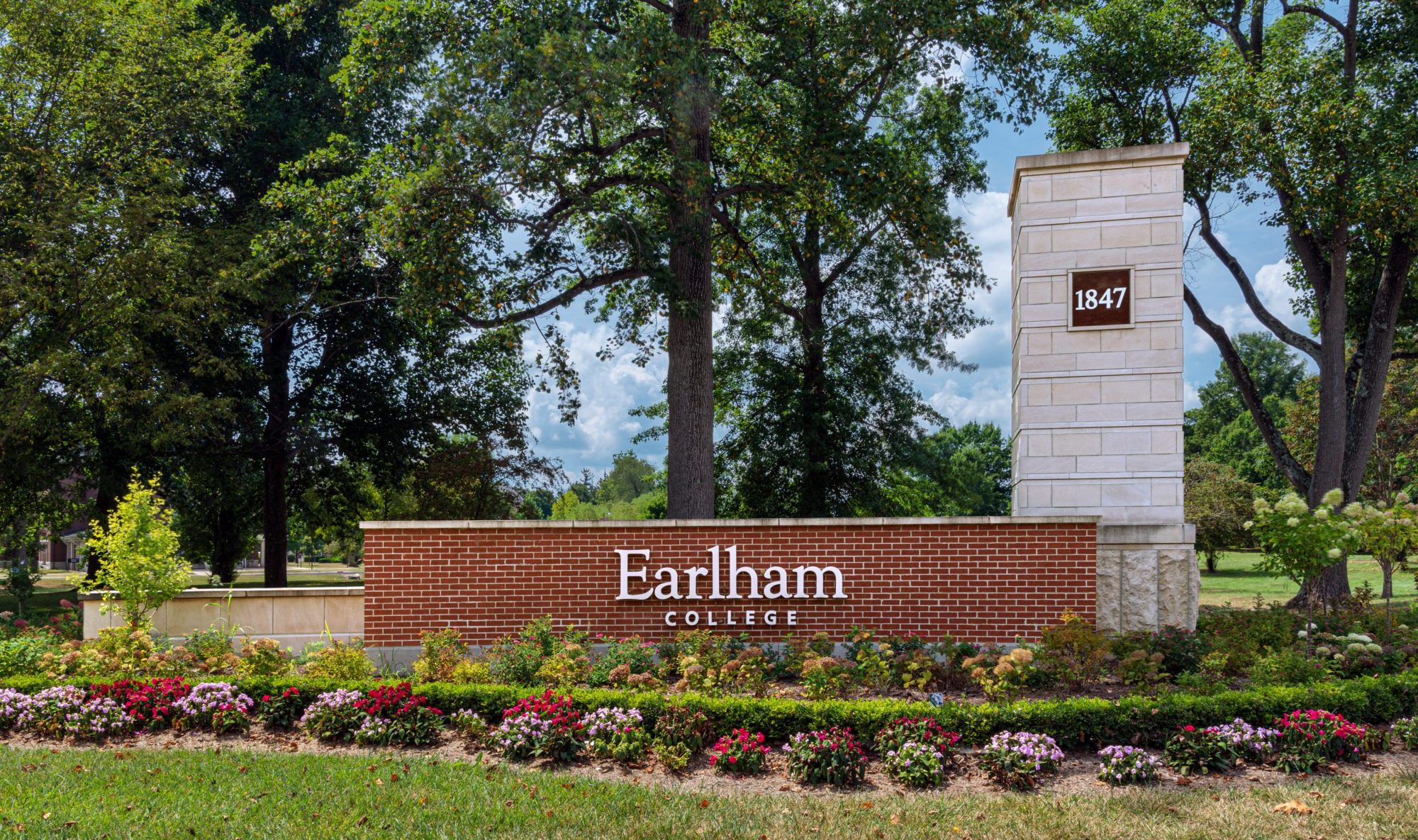
Founded in 1847 in Richmond, Indiana, Earlham College is a private liberal arts institution with deep Quaker roots. The college maintains its commitment to principles such as integrity, peace, social justice, and community engagement, which shape both its academic and extracurricular life. Despite its modest size, Earlham has built a reputation for academic rigor, experiential learning, and global perspectives. Dr. Paul Sniegowski, a biologist and former dean of the College of Arts and Sciences at the University of Pennsylvania, has served as President since August 2024.
For the 2023-24 academic year, U.S. News & World Report estimates Earlham’s total annual cost (including tuition, housing, and other expenses) at $53,930, with an average net price after aid of $25,496.
Curricula
Earlham College offers a diverse range of undergraduate programs, with popular majors including Biology, Environmental Science, International Studies, Business, and Psychology. The college places a strong emphasis on interdisciplinary learning, allowing students to engage in cross-disciplinary courses and independent research. The Epic Advantage Program provides students with up to $5,000 in funding for hands-on learning experiences, such as internships, field studies, and international travel.
The college also offers a 3+2 Engineering Program, where students spend three years at Earlham before transferring to an affiliated university, such as Columbia or Case Western Reserve, to complete an engineering degree. This dual-degree approach combines the benefits of a liberal arts education with technical training, preparing students for careers in engineering, business, and technology fields.
Strengths
- Commitment to Experiential Learning – Programs like Epic Advantage provide students with real-world experience, enhancing their competitiveness in the job market.
- Strong International Focus – Nearly 70% of Earlham students study abroad, and the college has partnerships with institutions worldwide.
- Small Class Sizes – With a 9:1 student-faculty ratio, Earlham offers personalized attention and mentoring opportunities.
- Values-Driven Education – Quaker principles of peace, social justice, and ethical leadership are embedded in the curriculum and campus culture.
- Strong Science and Environmental Programs – The Joseph Moore Museum and expansive natural study areas provide unique hands-on research opportunities.
Weaknesses
- Financial Stability Challenges – Like many small liberal arts colleges, Earlham faces financial pressures, including declining enrollment and reliance on tuition revenue.
- Leadership Continuity – Since 2011, Earlham has had four Presidents and one interim.
- Limited Graduate Programs – Earlham focuses almost exclusively on undergraduate education, which may limit options for students seeking to continue their studies within the same institution.
- Limited Name Recognition – Despite its strong academic reputation, Earlham struggles with brand recognition outside the Midwest and higher education circles.
Economic Impact
Earlham College is a major economic driver in Richmond, Indiana, and the surrounding region. The college employs hundreds of faculty and staff, supports local businesses, and contributes significantly to the local economy.
According to the Independent Colleges of Indiana, Earlham College has a total economic impact of $76 million on the state and has created nearly 725 jobs in Indiana. LinkedIn data suggests the college has nearly 9,000 alumni, with 1,400 residing in Indiana and 366 in the Richmond area.
Through programs like the Center for Social Justice and the Bonner Scholars Program, Earlham students engage in community service projects throughout Richmond. The college also frequently hosts cultural and educational events open to the public, further integrating itself into the civic life of the region.
Enrollment Trends
Earlham College has experienced a decline in full-time equivalent (FTE) enrollment over the past decade. In the 2013-14 academic year, enrollment stood at 1,159 students, dropping to 677 students in 2022-23. In the 2024 academic year, undergraduate FTE enrollment was 691.33 in the fall and 620.33 in the spring, reflecting ongoing challenges in retention and recruitment.

Degrees Awarded by Major
In 2024, Earlham College awarded 123 undergraduate degrees, including 84 single majors, 18 double majors, and one triple major. The distribution by major category is as follows:

Alumni
According to Earlham’s First-Destination Survey Report (2019-23):
- 28% of graduates continue their education within six months of graduation.
- 57% are employed within six months.
- The top five employment industries are Education, Healthcare, Internet & Software, and Research.
- Nearly 50% of alumni pursue graduate or professional school within 10 years.
Notable Alumni:
- Michael C. Hall (1993) – Emmy-nominated actor (Dexter, Six Feet Under).
- Margaret Hamilton (1958) – NASA software engineer, led Apollo Program flight software development.
- Michael Shellenberger (1993) – Author and journalist on free speech and environmental policy.
- Wendell Meredith Stanley (1926) – Nobel Prize-winning chemist in virus research.
Endowment and Financial Standing
Earlham College’s current endowment is $419 million, down from $475 million in 2021. Financial challenges stem from declining enrollment and reduced tuition revenue. In FY 2023, the college reported a net loss of $11.1 million.
Despite these challenges, Forbes (2024) rated Earlham A- with a 3.499 GPA, signaling relative financial resilience. The college is actively implementing strategic budget adjustments and seeking alternative revenue sources to ensure long-term sustainability.
Why Earlham Remains Relevant
In an era where liberal arts colleges must justify their value, Earlham College stands out for its values-driven, experiential education. Its commitment to academic excellence, social responsibility, and global engagement makes it an attractive option for students looking for more than just a degree.
Earlham’s focus on sustainability, diversity, and international collaboration positions it as a model institution that integrates ethical leadership with practical learning. As higher education continues to evolve, Earlham demonstrates that a small college can have a big impact on both students and the world.

Dean Hoke is Managing Partner of Edu Alliance Group, a higher education consultancy, and formerly served as President/CEO of the American Association of University Administrators (AAUA). With decades of experience in higher education leadership, consulting, and institutional strategy, he brings a wealth of knowledge on small colleges’ challenges and opportunities. Dean, along with Kent Barnds, are co-hosts for the podcast series Small College America. Season two begins February. 25, 2025


 Edu Alliance Journal