



Making University Shared Governance Work

Dan L KingDr. Dan King is President and Chief Executive Officer of the American Association of University Administrators. He has worked as a provost, academic vice president, dean, and education faculty member in a variety of institutional types, from community college through land-grant research university. Dan serves on the Edu Alliance Advisory Council

While clutched fiercely in many American colleges and universities, shared governance is—at best—an ill-defined concept, with probably as many meanings as there are institutions and individuals, which cling to its principles. No matter what meaning one attaches to shared governance, it is almost always used to refer to some degree of consultation between faculty and administration in some (or many) aspects of the institution’s day-to-day operations. In some places this sharing is considerable, in others, it is quite limited.

Whenever college/university institutional governance is shared, this sharing represents a real and sometimes powerful localized political process. As is the case with virtually every political process, competing positions—sometimes polar opposite competing positions—rule the day. For example, faculty often suggest that they are the voice of principal, and their role in governance is to ensure that the administration’s more pragmatic position is always balanced by principle.   Just as we see in our daily lives outside of academe, in higher education all politics are personal; all politics are local. Thus, it should come as no surprise to see the most liberal-principled faculty member becomes ultra-conservative when his/her department is threatened. This is not to suggest that college and university administrators are “the constantly dependable voice of reason” … they are not. It does appear that in general reasonable-acting administrators do more often take a broader perspective on institutional needs and priorities; this appears to be even truer as one observes administrators at each higher echelon level. If it is so that as a group, administrators do more quickly and more fully embrace institutional change, how then can administrators more effectively work with their faculty colleagues with whom they are sharing in the governing of the institution?

First, administrators—department chair through president—should embrace and work within the recognized political realities of shared governance. We must remember that all politics—and getting others to agree with our positions in an exercise in politics—are personal.

We have an effective model: No matter how one feels about President Lyndon Johnson’s overall presidential leadership, it is unarguable that he was a masterful politician. From his behaviors as Senate Leader, we can observe the importance of developing personal relationships. Johnson learned and remembered everyone’s name; he learned about and remembered—or kept notes to help him remember—things that were important in the lives of others. Then, whenever he encountered someone who might be either a political friend or foe, he demonstrated the importance of their relationship by recalling information to personalize the relationship. He remembered birthdays and anniversaries. He called at times other than when he wanted something. College and university administrators can do the same thing.

Know the names of your colleagues; not just the ones you encounter day-to-day, not just the ones that work directly under or over you in the organizational chart, but colleagues who are two or three steps removed. Know the names of your colleagues’ spouses or significant others and their children; ask about their interests. (If necessary, keep notes for yourself so you can follow up to demonstrate that your most recent past visit was significant.) Send email birthday wishes. Stop by other people’s offices; don’t always have them come to you. When you are talking with them, use behaviors that communicate how important they are to you; eye contact and affirming body language are important. Remember, politics are personal; being a good and interested communicator is making an investment in tomorrow’s deliberation.

Actually, the personal side of institutional politics is the easy part. It’s the local perspective that presents the greatest challenge. The local perspective is often characterized by a reluctance to change, sometimes accompanied by the comment, “That is not how we do it here.” Overcoming the inertia of the local perspective is sometimes very difficult. One strategy that helps is to ensure that the greatest number of personnel is exposed to organizational ideas beyond their institution.

Typically presidents and vice presidents are exposed to new organizational ideas. There are journals and professional magazines, websites and blogs, and a wide array of professional meetings that provide exposure to new ideas. With each lower level in the administrative hierarchy fewer personnel avail themselves of these opportunities.

The professional development of academic chairs is an example of a group at a lower level of administrative hierarchy. (In fact, many chairs do not see themselves as administrators at all.) Given that many chairs leave departmental leadership after a few years to return to full-time faculty responsibilities, an investment in the development of an appreciation of an administrative perspective is a good investment in potential future allies within the shared governance system.

Department chairs typically focus their professional development on their discipline. If a goal is to gain a broader institutional perspective that might later translate into acceptance of institution-wide need for change, higher echelon administrators should look to expand the professional development perspective of department chairs to generate a less-localized perspective. One way to do this is to look at meetings of professional associations and to have personnel attend meetings that they would not otherwise typically attend. Here are three examples:

  • Typically, presidents and academic vice presidents attend the annual meeting of the American Council on Education. Sponsoring the attendance of a dean or academic department chair annually exposes those individuals to an array of stimulating and challenging presentations on the changing landscape of higher education.
  • The Academic Affairs Summer Institute of the American Association of State Colleges and Universities is designed for academic vice presidents. Department chairs can acquire a broadened perspective from an impressive array of speakers and sessions.
  • The Council of Independent Colleges offers large and smaller focused meetings, many of which support the development of expanded administrative perspectives.

The list of organizations and opportunities is huge. My suggestion is to look beyond the typical.

If, however, our goal is to de-localize perspectives, then participation in a meeting that broadens perspective—valuable as it may be—is not sufficient. Those experiences should be followed up on campus with some suitable form of sharing, so the message is communicated more widely. One strategy is to plan for three individuals to each attend some broadening professional meeting (different meetings, not three attending the same meeting) and then to schedule some relaxed forum where these three each share a new thought, concept, or idea acquired at the meeting. A facilitated discussion might just lead even more faculty to realize that “The way we do it,” needn’t be the only perspective.

In short, professional development opportunities offered by professionals associations can be used tactically to facilitate campus-shared governance … it just takes a bit more creative approach.

cropped-edu-alliance-logo-square1.jpgEdu Alliance is a higher education consultancy firm with offices in the United States and the United Arab Emirates. The founders and its advisory members have assisted higher education institutions on a variety of projects, and many have held senior positions in higher education in the United States and internationally.

Our specific mission is to assist universities, colleges and educational institutions to develop capacity and enhance their effectiveness.
Presidential Leadership and Crisis Management within Institutions at Risk

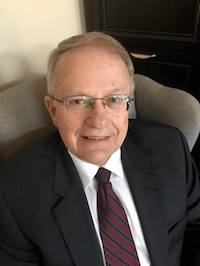
Steven JonesBy Dr. Stephen JonesPresident/CEO of Great Blue Heron in Madison, Alabama and a member of the Edu Alliance Advisory Council.

What gives me license to write about presidential leadership, crisis management, and universities at risk? First, an unorthodox entry to higher education administration – 12 years in the paper and allied products manufacturing industry right out of a bachelor’s degree. A mid-30s hard-drive to a PhD with a wife and two kids, at a level of personal and professional maturity far beyond most much-younger, still green graduate students. Nine years advancing through the faculty ranks and tenure at Penn State. Reporting directly to the president at three subsequent universities, and then serving as president at four universities. I have always thought of myself as an industrial forester who just happened to stumble into higher education administration. I have held tightly to the belief that universities are businesses, albeit not-for-profit. Neither the Fortune 500 company I served or any of the nine universities that issued me a paycheck could spend money it did not have.

My most recent CEO gig gave me a very special perspective. As a six-month, time-certain Interim President, I had to leap into the deep end, assess the context, evaluate the team, compare actual to potential, and make near-immediate adjustments (major and minor) to bridge the gap to permanent leadership. The Board asked me to pave the way for an exemplary president who could hit the ground at full speed, with most of the obstacles, potholes, and road debris already addressed. I repeated the refrain often that my preceding six positions had given me ample opportunity to make most of the mistakes available for learning. The definition of experience – that thing you get right after you needed it! I came to the Interim Presidency with a great deal of hard-won experience.

Assessing University Status, Risks, and Potential

I will speak from my aggregate experience, both as a CEO and on senior administrative teams. I’ve cloaked the identity of individual universities. We’ve all seen the criteria signaling financial risk. The more boxes checked, the greater the vulnerability:

  • Rural location
  • Poorly endowed
  • Non- or weakly-selective admissions
  • Excessive deferred maintenance
  • Significant debt
  • High discount rate
  • Declining enrollment/revenue
  • Weak alumni base and tepid annual giving

Closer inspection might reveal other serious problems that reach beyond risk to imminent peril:

  • High Accounts Receivable
  • Composite Financial Index already in the Zone or below
  • Successive years of budget cutting and mid-year expenditure reductions
  • Insistence upon saving as the way to prosperity
  • Satisfaction with adequate
  • Poor retention and low graduation rate
  • Uninspired leadership – both Board and administration
  • Absence of passion and purpose
  • No clear brand, identity, distinction, or reputation

My Ecosystem Approach — As a forester and doctoral-trained applied ecologist, I view universities the same way I might any organism in a natural ecosystem. My doctoral research evaluated soil-site productivity. That is, the potential for a given set of conditions to produce biomass and forest products and services. Often, the actual forest in place may express past treatments and poor management, and not be truly reflective of the potential. I used independent measures of soil, slope, fertility, topography, and other objective metrics to assess potential. If a great site is supporting a poorly performing stand, then investments in rehabilitation could return dividends. If the site is poor, no investment will return dividends. The same is true for universities.

Is a particular university worth attempting salvage and rehabilitation? Is the site (the collective factors constituting potential) such that a new approach, refreshed leadership, and rededicated efforts can right it? Is it time to cut losses and abandon the institution? Not every university at risk can be saved. Not every Board can rise above itself. Some CEOs cannot lead even a healthy institution. Some leaders cannot ask the right questions, much less answer them.

A university with which I am familiar brought on a new president two months after it had added a million dollars in long term debt just to meet operating expenses on a $15 million annual budget. It had just opened a new residence hall, named after a Board member who donated a sum equal to just four percent of the total project cost. Its endowment was a mere $2 million. Deferred maintenance costs were excessive. For example, brick spalled from the south side of the gymnasium. Enrollment sagged. The discount rate exceeded 55 percent. The Board held the unenviable reputation as the most inept of all institutions in the state. The Board repeatedly refused to approve entrepreneurial ventures… efforts that might have lifted the university to a recovery ramp. This institution stood at the abyss. Salvageable? Not with that Board. With a new Board and outlook? Perhaps.

I know of another university, well maintained with solid potential, exciting programs (existing and envisioned), competent faculty, and manageable debt. Yet, the administration had a fatalistic attitude. That is, believing that decreasing state funding and weak high school graduation demographics led to an inevitable spiral of lessening enrollment, revenue, staffing, etc. Satisfaction with adequate, suppression of ambition, and acceptance of mediocrity destined the institution to a slow, inexorable decline. Instead, new leadership ascertained what stood within reach, awakened the institution to its potential… stirred the Board, administration, faculty, staff, alumni, and its broad community to rise far above what had been accepted as inevitable.

The university (in my metaphor, the forest) flourished under innovative, challenging, and inspired leadership. Rich soil on a wonderful site nourished recovery and response. All the ingredients were in place. A systematic assessment, innovative ventures, strategic programmatic investments, organizational realignment, critical senior-level adjustments, and an infusion of passion, power, and purpose into a decent Board set the university afire.

Failing, or even falling short of potential performance, constitutes a crisis. Better to anticipate and address the situation proactively. In the first example, the hole had already grown too deep. The second, far too close for comfort, yet still in time for decisive, firm, and strategic action.

Look, See, Feel, and Act

I have embraced four essential verbs as critical to dealing with any enterprise, whether a multi-million-dollar university or a family. First, I implore those involved in leadership roles to Look – to focus with eyes open, and attentive to the world around us. I’ve seen many people open their eyes, however, without actually seeing. We are too often blinded by the distractions of life and our digital environs. I implore folks to See… to pay attention with senses alert to multiple dimensions. To see deeply, through layers of the visual… beyond and beneath the surficial. Looking and seeing alone do not suffice. We must see deeply enough to evoke Feeling. Feeling, emoting, and striking empathy for the organization and the cause sufficient to spur Action. Without action, looking, seeing, and feeling accomplish nothing. The first institution operated blindly for far too long. Fresh eyes, sharpened with deep experience, brought insight, offered remedies, and urged action in time to lift the second university to new heights.

University leadership must be fully attuned to the environment… the ecosystem within which the institution operates. Look, see, and feel to a level sufficient to assess whether action investments can be fruitful. Effectively operating any enterprise demands a business-like approach. Again, a university is a business, albeit not-for-profit. Operating requires revenue. Over some timeframe, revenue must exceed or equal expenditures. Although a noble cause, higher education still must abide by the rules that dictate business – you cannot spend money you don’t have. And like a forest, an education enterprise cannot grow to be The Mighty Oak on shallow, impoverished soil on an exposed upper slope. Site resources are too limiting. Nature, nor business, allows the impossible and even the best of sites will not produce The Mighty Oak with inadequate management practices.

Because I still operate with my industry orientation to action, I have observed with frustration that universities approach decisions with tendency to “ready, aim, aim, aim, aim….” The opportunity window too often closes without decisive action. I prefer “ready, fire, aim,” then, if necessary, tune the aim. Act before inaction assures failure. A dear fisheries biologist friend once said to me, “Steve, there is only one way to guarantee you will catch no fish. Don’t throw a line in the water.” The first example university avoided fishing. The second, with counsel, fresh looking and seeing, and urging, decided to throw a fish fry!

Dr. Jones article “Presidential Leadership and Crisis Management within Institutions at Risk” is a part of a series called: Things That Keep Higher Education Leaders Awake at Night. Edu Alliance thanks Steve as well as our Partners, Advisors and Friends for their valuable contributions and insights.

cropped-edu-alliance-logo-square.jpgEdu Alliance is a higher education consultancy firm with offices in the United States and the United Arab Emirates. The founders and its advisory members have assisted higher education institutions on a variety of projects, and many have held senior positions in higher education in the United States and internationally.

Our specific mission is to assist universities, colleges and educational institutions to develop capacity and enhance their effectiveness.