

Higher Ed 2020 The Year of Solutions

Dean Head and Shoulder for webBy Dean Hoke January 13, 2020 – Since Edu Alliance was founded in 2014, we have published a bi-weekly newsletter and the Edu Alliance Journal, a blog that included original articles related to higher education.  In 2018 -19  we produced a series titled “Things that Keep Higher Education Leaders Awake at Night.” We published over 20 articles on a variety of issues that pointed out higher education challenges concerning economics, international recruitment, and declining public perception of the value of education.

We concluded the series in the summer of 2019 when we presented the results of a survey on the topic with responses from 50 senior administrators across the country to the American Association of University Administrators. To read the results, see the July 16th article titled College Administrators Answer: “What Keeps You Awake at Night?

Beginning the week of January 27th, the Journal will take a new direction and begin a new series of bi-weekly articles that will focus on best practices and solutions for the challenges our writers have experienced working in higher education.

We will address a variety of subjects, including:

  • Growing a President – the path less traveled
  • How our university uses Artificial Intelligence and Smart Spaces
  • Educational technology in the classroom
  • Small town and long gown: Enhancing small town and small college partnerships
  • Building faculty for the future
  • Recruiting and retaining adult students
  • Lessons learned while serving as a university administrator overseas
  • Successful international partnerships
  • Workforce partnerships with industry
  • The changing world of accreditation
  • Recruitment of key faculty and administrators outside the US
  • How coaching can help in being an effective higher education leader
  • Small college fundraising is alive and well

Based on our experience working in many countries, we understand that best practices and solutions in education can come from any university in the world. The series is written by members and advisors of our team as well as higher education professionals worldwide who have found solutions and  developed best practices for their institution.  The articles will be included in our Blog and our newsletters, the Edu Alliance Journal – US and International Editions. They will be published bi-weekly and are offered at no cost to the subscriber.

If you would like to subscribe to our newsletter and The Journal, please feel free to contact me (Dean Hoke). Also, we are always looking for new solutions that can help our worldwide higher education colleagues and their institutions. If you are interested in submitting an article, please contact me with your story proposal.

———-END—————-
cropped-edu-alliance-logo-square1.jpg

Edu Alliance Group, Inc. (EAG) is an education consulting firm located in Bloomington, Indiana USA and Abu Dhabi, United Arab Emirates. We assist higher education institutions worldwide on a variety of mission critical projects. Our consultants are accomplished university / college leaders who share the benefit of their experience to diagnose and solve challenges.

EAG has provided consulting and successful solutions for higher education institutions in Australia, Egypt, Georgia, India, Kazakhstan, Morocco, Nigeria, Uganda,  United Arab Emirates, and the United States.

Edu Alliance offers higher education institutions a wide range of consulting services including:

International Strategic Planning – Strategies ranging from campus and feasibility studies, branch campuses, student recruitment, academic partnership and student exchanges.

Executive Coaching for higher education leaders.

Small College advisory support.

Accreditation – Helping prepare documentation, data and evidences to meet the requirements of accrediting agencies and state licensing.

Business intelligence / Institutional research(student demographics and market potential, competition analysis, due diligence on business regulations and agency controls) for schools, colleges, universities and vocational institutes.

Executive Search – Quality educational leaders are never easy to identify for an long term appointment. EAG has a unique niche assisting a colleges and universities in such executive searches. We have assisted institutions throughout the world in identifying and recruiting C-Level Executives and Deans.

If you are an organization that wants to know more how Edu-Alliance can best serve you, please contact me at info@edualliancegroup.com.
Community Relations in Public Universities

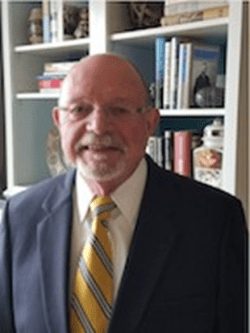
RogerBrown-310Dr. Roger G. Brown is Chancellor Emeritus of the University of Tennessee at Chattanooga (UTC).  During his 7-year tenure enrollment increased over 20%, and Dr. Brown was integral in fundraising that generated $81.2 million for scholarships, professorships, and academic programs. He was the key ambassador for government and community relations. Dr. Brown, a member of the Edu Alliance Advisory Council is involved in leadership roles at several community nonprofit organizations in Chattanooga, Tennessee.

The importance of positive, productive relations with community leaders, elected officials, business executives, advocacy groups, neighborhood associations, and other stakeholders is an essential factor for success in higher education institutions. An unsystematic survey of university websites demonstrates that many institutions establish offices or entire departments to perform community relations outreach. As Provost and then Chancellor of mid-sized public universities, I used community relations to build support for the institution, to help to identify employer needs and internships, to recruit local students, to expand efforts for inclusiveness on campus and in the community, and to lobby for resources from the state and corporations.

Elements that made up the community relations function at the universities which I served included among others

(1) a Chancellor’s Roundtable for local business leaders, elected officials, hospital administrators, clergy, and staff and faculty from neighboring colleges and universities

(2) a Multicultural Advisory Council for input on the university’s reputation for inclusiveness and attention to broad-based outreach to the community

(3) gatherings of the Student Government Association and other student leaders where I learned ideas about their connections, or lack thereof, to the larger community

(4) college- and department-based advisory councils specifically aimed at stakeholders of the particular work of those departments and colleges

The Roundtable met quarterly for a brief presentation of a university program or area of need; then the members were solicited for input. I learned that it was important to listen carefully to the Roundtable as an advisory committee and then to report back to the members on what actions have been based on the Roundtable discussions. Turnover on the Roundtable occurred naturally and thereby added more opinions and expertise from new members. My staff and selected students also participated in the ongoing issue discussions. This promoted dialogues at the department level for understanding and action on the Roundtable’s identified issues. From time to time, members of the Roundtable made judgments about the efficacy of the Roundtable-university dialogues which led to improved understanding between the members and me.  Chancellor’s Roundtable members regularly were invited to campus events, receptions at the Chancellor’s residence, and concerts and athletic events to promote ongoing dialogue and build camaraderie.

The Multicultural Advisory Council became an important source of feedback on the campus’s reputation for inclusiveness in student and faculty recruitment, on appropriate activities which focused on minority students, and on ways in which the university could improve upon such functions. The Council was made up of minority alumni, clergy, secondary schools’ leaders, employers, and public safety representatives, among other groups. In quarterly meetings the Council participated in lively, free-wheeling dialogues with me, the Student Affairs staff, representatives from campus public safety offices, and campus religious leaders. The members of the Council were encouraged to bring to our attention instances of discrimination of which they were aware, and my staff and I followed up to determine the accuracy of the reports of discrimination and follow-up as appropriate within the procedures of the Student Code of Conduct, state law, and, where necessary, law enforcement agencies.

Gatherings of student leaders and other interested students were particularly helpful to explore the climate of community relations which had touched the students in both negative and positive ways. I found the students to be forthright and thoughtful in their conversations. One campus I led was urban, and the students regularly interacted with merchants, churches, public safety officers, and prospective employers. One example of the students’ influence on community-university relationships had to do with access to reasonable food stores and drug stores. After hearing their complaints, the senior vice chancellor for business worked with local business leaders to encourage them to bring such stores to an under-developed street adjacent to campus. Today, several food stores, drug stores, and affordable clothing shops are available to the students. Both students and the participating merchants have benefited from their collaboration, which is the ideal outcome of positive community relations.

Finally, advisory councils for colleges and departments were effective in building solid community relations to further discussions about student internships, to explore skills and knowledge that the students can learn from companies and agencies, and to foster mutual respect and support for their respective goals. In my experience, student interactions with college or department advisory councils led to richer learning opportunities for both students and members of the advisory councils. The incorporation of art students and faculty into projects of public art and corporate commissions for graphic art was one good example of the connections that advisory councils can promote. Another example was the close collaboration between our school of business with departments like accounting, finance, marketing, and human resources. Discussions about “real world” expectations for graduates in the varying fields of expertise were invaluable to the students and the firms who were eager to hire the best employees.

University-community relations are essential to maximize how both can profit from face-to-face interactions among students, administrators, and community businesses and employers alike. The time spent in building such positive relationships can bring about desirable outcomes for all concerned.


cropped-edu-alliance-logo-square1.jpgEdu Alliance is a higher education consultancy firm with offices in the United States and the United Arab Emirates. The founders and its advisory members have assisted higher education institutions on a variety of projects, and many have held senior positions in higher education in the United States and internationally.

Our specific mission is to assist universities, colleges and educational institutions to develop capacity and enhance their effectiveness.