
Requiem for a College: A Conversation with Author Jon Nichols

By Dean Hoke, October 21, 2025

🎧 Listen to the full podcast episode: https://smallcollegeamerica.transistor.fm/25
📺 Watch the video on YouTube: https://youtu.be/5e7TmyDxBWo

In the newest episode of Small College America, my co-host Kent Barnds and I speak with Jon Nichols, author of Requiem for a College: The Troubling Trend of College Closures in the United States. Nichols’ book offers a deeply personal and reflective look at the 2017 closure of Saint Joseph’s College, an institution intertwined with his family for three generations—his father, Dr. John Nichols, taught there for five decades, and his brother Michael continues to teach at Purdue University.

The Story of Saint Joseph’s College

Founded in 1889 by the Missionaries of the Precious Blood, Saint Joseph’s College in Rensselaer, Indiana, was a small Catholic liberal arts institution known for its close-knit community, rigorous Core Curriculum, and dedication to service. For more than a century, it served as both an educational and cultural anchor for Rensselaer and surrounding Jasper County, educating generations of teachers, business leaders, and clergy. At its peak in the 1970s, the college enrolled more than 1,500 students and earned national recognition for its innovative Core Program, which blended history, philosophy, and theology in an interdisciplinary approach to learning.

Despite its enduring mission and loyal alumni base, Saint Joseph’s faced mounting financial pressures and declining enrollment, leading to the suspension of operations in 2017. By that year, the college’s enrollment had declined to about 900 students, a sharp drop from its earlier decades of strength. The closure reverberated throughout the region, symbolizing a growing crisis among small, tuition-dependent private colleges across the United States.

About Jon Nichols

Jon Nichols is an author, educator, and observer of the changing higher education landscape. A graduate of Saint Joseph’s College and longtime member of its academic community, Nichols witnessed firsthand the personal and institutional struggles that informed Requiem for a College: The Troubling Trend of College Closures in the United States. His work combines narrative storytelling with research and reflection, capturing both the emotional and systemic dimensions of college closures. Today, Nichols teaches English at Waubonsee Community College in Illinois, where he continues to write and speak about the sustainability challenges facing small colleges and the communities they serve.

Nichols captures the profound emotional and social toll of a college closure—on faculty, students, alumni, and the surrounding town. His narrative reminds readers that when a college closes, it is not just an institution that disappears, but a community, a sense of purpose, and a shared legacy.

Our conversation explores a range of topics, including the warning signs that should have been taken more seriously—both at Saint Joseph’s and across higher education—and how his book captures not only institutional failure but also human loss: the erasure of identity, community, and legacy. Nichols also reflects on what sustainable models of higher education might look like in the years ahead and what long-term effects the closure has had on former students, faculty, and the Rensselaer community.


Small College America is a podcast series that shines a spotlight on the powerful impact of small colleges across the nation. Hosted by Dean Hoke and Kent Barnds, the podcast brings listeners inside the world of small colleges through candid conversations with higher education leaders, policy experts, and innovators. Each episode explores how these institutions are adapting, thriving, and continuing to deliver a personal, high-quality education.

“It’s Not Worth the Risk”: Why Global Talent is Turning Away from U.S. Higher Education—and What We’re Losing

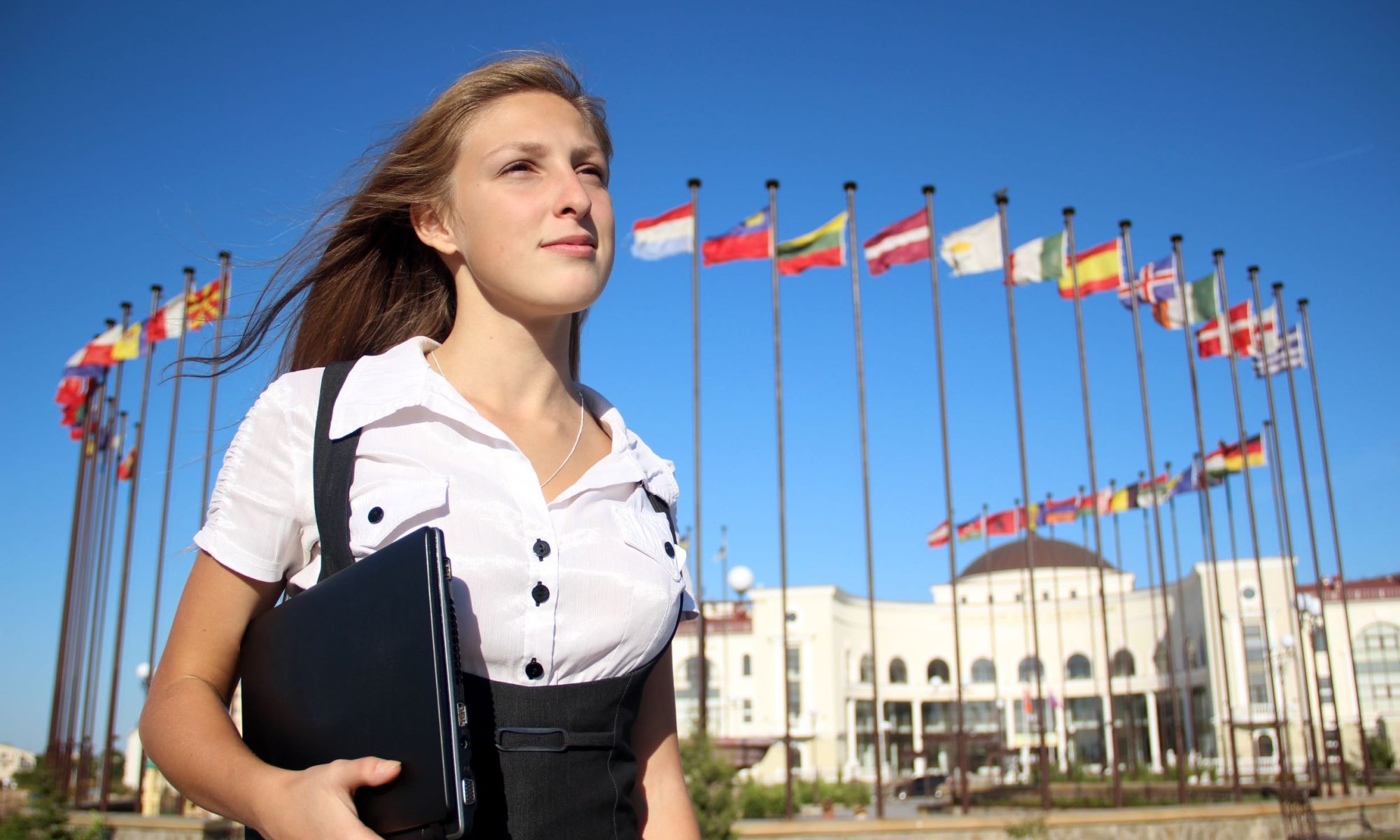
In 2025, much of my professional focus has been on small colleges in the United States. But as many of you know, my colleague and Edu Alliance co-founder, Dr. Senthil Nathan, and I also consult extensively in the international higher education space. Senthil, based in Abu Dhabi, UAE—where Edu Alliance was founded was asked by a close friend of ours, Chet Haskell, about how the Middle East and its students are reacting to the recent moves by the Trump Administration. Dr. Nathan shared a troubling May 29th article from The National, a UAE English language paper titled, It’s not worth the risk”: Middle East students put US dreams on hold amid Trump visa crackdown.

The article begins with this chilling line:

“Young people in the Middle East have spoken of their fears after the US government decided to freeze overseas student interviews and plan to begin vetting their social media accounts. The directive signed by Secretary of State Marco Rubio and sent to diplomatic and consular posts halts interview appointments at US universities.”

The UAE, home to nearly 10 million people—90% of whom are expatriates—is a global crossroads. Many of their children attend top-tier international high schools and are academically prepared to study anywhere in the world. Historically, the United States has been a top choice for both undergraduate and graduate education.

But that is changing.

This new wave of student hesitation, and in many cases fear, represents a broader global shift. Today, even the most qualified international students are asking whether the United States is still a safe, welcoming, or stable destination for higher education. And their concerns are justified.

At a time when U.S. institutions are grappling with enrollment challenges—including a shrinking pool of domestic high school graduates—we are simultaneously sending signals that dissuade international students from coming. That’s not just bad policy. It’s bad economics.

According to NAFSA: Association of International Educators, international students contributed $43.8 billion to the U.S. economy during the 2023–2024 academic year and supported 378,175 jobs across the country. These students fill key seats in STEM programs, support local economies, and enrich our campuses in ways that go far beyond tuition payments.

And the stakes go beyond higher education.

A 2024 study found that 101 companies in the S&P 500 are led by foreign-born CEOs. Many of these executives earned their degrees at U.S. universities, underscoring how American higher education is not just a national asset but a global talent incubator that fuels our economy and leadership.

Here are just a few examples:

  • Jensen Huang: Born in Taiwan (NVIDIA) – B.S. from Oregon State, M.S. from Stanford
  • Elon Musk: Born in South Africa (Tesla, SpaceX) – B.A. from the University of Pennsylvania
  • Sundar Pichai: Born in India (Alphabet/Google) – M.S. from Stanford, MBA from Wharton
  • Mike Krieger: Born in Brazil (Co-founder of Instagram) B.S. and M.S. Symbolic Systems and Human-Computer Interaction, Stanford University
  • Satya Nadella: Born in India (Microsoft) – M.S. from the University of Wisconsin–Milwaukee, MBA from the University of Chicago
  • Max Levchin: Born in Ukraine (Co-founder of PayPal, Affirm), Bachelor’s in Computer Science, University of Illinois at Urbana-Champaign
  • Arvind Krishna: Born in India (IBM) – Ph.D. from the University of Illinois, Urbana-Champaign
  • Safra Catz: Born in Israel (Oracle) – Undergraduate & J.D. from University of Pennsylvania
  • Jane Fraser: Born in the United Kingdom (Citigroup) – MBA from Harvard Business School
  • Nikesh Arora: Born in India  (Palo Alto Networks) – MBA from Northeastern
  • Jan Koum: Born in Ukraine (Co-founder of WhatsApp), Studied Computer Science (did not complete degree) at San Jose State University

These leaders represent just a fraction of the talent pipeline shaped by U.S. universities.

According to a 2023 American Immigration Council report, 44.8% of Fortune 500 companies were founded by immigrants or their children, including iconic firms like Apple, Google, and Tesla. Together, these companies generate $8.1 trillion in annual revenue and employ over 14.8 million people globally.

The Bottom Line

The American higher education brand still carries immense prestige. But prestige alone won’t carry us forward. If we continue to restrict and politicize student visas, we will lose not only potential students but also future scientists, entrepreneurs, job creators, and community leaders.

We must ask: Are our current policies serving national interests, or undermining them?

Our classrooms, campuses, corporations, and communities are stronger when they include the world’s brightest minds. Let’s not close the door on a future we have long helped build.


Dean Hoke is Managing Partner of Edu Alliance Group, a higher education consultancy. He formerly served as President/CEO of the American Association of University Administrators (AAUA). With decades of experience in higher education leadership, consulting, and institutional strategy, he brings a wealth of knowledge on international partnerships and market evaluations.