



Making University Shared Governance Work

Dan L KingDr. Dan King is President and Chief Executive Officer of the American Association of University Administrators. He has worked as a provost, academic vice president, dean, and education faculty member in a variety of institutional types, from community college through land-grant research university. Dan serves on the Edu Alliance Advisory Council

While clutched fiercely in many American colleges and universities, shared governance is—at best—an ill-defined concept, with probably as many meanings as there are institutions and individuals, which cling to its principles. No matter what meaning one attaches to shared governance, it is almost always used to refer to some degree of consultation between faculty and administration in some (or many) aspects of the institution’s day-to-day operations. In some places this sharing is considerable, in others, it is quite limited.

Whenever college/university institutional governance is shared, this sharing represents a real and sometimes powerful localized political process. As is the case with virtually every political process, competing positions—sometimes polar opposite competing positions—rule the day. For example, faculty often suggest that they are the voice of principal, and their role in governance is to ensure that the administration’s more pragmatic position is always balanced by principle.   Just as we see in our daily lives outside of academe, in higher education all politics are personal; all politics are local. Thus, it should come as no surprise to see the most liberal-principled faculty member becomes ultra-conservative when his/her department is threatened. This is not to suggest that college and university administrators are “the constantly dependable voice of reason” … they are not. It does appear that in general reasonable-acting administrators do more often take a broader perspective on institutional needs and priorities; this appears to be even truer as one observes administrators at each higher echelon level. If it is so that as a group, administrators do more quickly and more fully embrace institutional change, how then can administrators more effectively work with their faculty colleagues with whom they are sharing in the governing of the institution?

First, administrators—department chair through president—should embrace and work within the recognized political realities of shared governance. We must remember that all politics—and getting others to agree with our positions in an exercise in politics—are personal.

We have an effective model: No matter how one feels about President Lyndon Johnson’s overall presidential leadership, it is unarguable that he was a masterful politician. From his behaviors as Senate Leader, we can observe the importance of developing personal relationships. Johnson learned and remembered everyone’s name; he learned about and remembered—or kept notes to help him remember—things that were important in the lives of others. Then, whenever he encountered someone who might be either a political friend or foe, he demonstrated the importance of their relationship by recalling information to personalize the relationship. He remembered birthdays and anniversaries. He called at times other than when he wanted something. College and university administrators can do the same thing.

Know the names of your colleagues; not just the ones you encounter day-to-day, not just the ones that work directly under or over you in the organizational chart, but colleagues who are two or three steps removed. Know the names of your colleagues’ spouses or significant others and their children; ask about their interests. (If necessary, keep notes for yourself so you can follow up to demonstrate that your most recent past visit was significant.) Send email birthday wishes. Stop by other people’s offices; don’t always have them come to you. When you are talking with them, use behaviors that communicate how important they are to you; eye contact and affirming body language are important. Remember, politics are personal; being a good and interested communicator is making an investment in tomorrow’s deliberation.

Actually, the personal side of institutional politics is the easy part. It’s the local perspective that presents the greatest challenge. The local perspective is often characterized by a reluctance to change, sometimes accompanied by the comment, “That is not how we do it here.” Overcoming the inertia of the local perspective is sometimes very difficult. One strategy that helps is to ensure that the greatest number of personnel is exposed to organizational ideas beyond their institution.

Typically presidents and vice presidents are exposed to new organizational ideas. There are journals and professional magazines, websites and blogs, and a wide array of professional meetings that provide exposure to new ideas. With each lower level in the administrative hierarchy fewer personnel avail themselves of these opportunities.

The professional development of academic chairs is an example of a group at a lower level of administrative hierarchy. (In fact, many chairs do not see themselves as administrators at all.) Given that many chairs leave departmental leadership after a few years to return to full-time faculty responsibilities, an investment in the development of an appreciation of an administrative perspective is a good investment in potential future allies within the shared governance system.

Department chairs typically focus their professional development on their discipline. If a goal is to gain a broader institutional perspective that might later translate into acceptance of institution-wide need for change, higher echelon administrators should look to expand the professional development perspective of department chairs to generate a less-localized perspective. One way to do this is to look at meetings of professional associations and to have personnel attend meetings that they would not otherwise typically attend. Here are three examples:

  • Typically, presidents and academic vice presidents attend the annual meeting of the American Council on Education. Sponsoring the attendance of a dean or academic department chair annually exposes those individuals to an array of stimulating and challenging presentations on the changing landscape of higher education.
  • The Academic Affairs Summer Institute of the American Association of State Colleges and Universities is designed for academic vice presidents. Department chairs can acquire a broadened perspective from an impressive array of speakers and sessions.
  • The Council of Independent Colleges offers large and smaller focused meetings, many of which support the development of expanded administrative perspectives.

The list of organizations and opportunities is huge. My suggestion is to look beyond the typical.

If, however, our goal is to de-localize perspectives, then participation in a meeting that broadens perspective—valuable as it may be—is not sufficient. Those experiences should be followed up on campus with some suitable form of sharing, so the message is communicated more widely. One strategy is to plan for three individuals to each attend some broadening professional meeting (different meetings, not three attending the same meeting) and then to schedule some relaxed forum where these three each share a new thought, concept, or idea acquired at the meeting. A facilitated discussion might just lead even more faculty to realize that “The way we do it,” needn’t be the only perspective.

In short, professional development opportunities offered by professionals associations can be used tactically to facilitate campus-shared governance … it just takes a bit more creative approach.

cropped-edu-alliance-logo-square1.jpgEdu Alliance is a higher education consultancy firm with offices in the United States and the United Arab Emirates. The founders and its advisory members have assisted higher education institutions on a variety of projects, and many have held senior positions in higher education in the United States and internationally.

Our specific mission is to assist universities, colleges and educational institutions to develop capacity and enhance their effectiveness.
Will the Higher Education Act be reauthorized in 2018?

ken-salomonKen Salomon is chair of the Thompson Coburn Lobbying & Policy Group. Over the course of his career, he has provided clients with government relations and public policy services in a broad range of issues, including higher education, intellectual property, telecommunications, e-commerce, financial services, and international trade. Ken is also a member of the Edu Alliance Advisory Council.

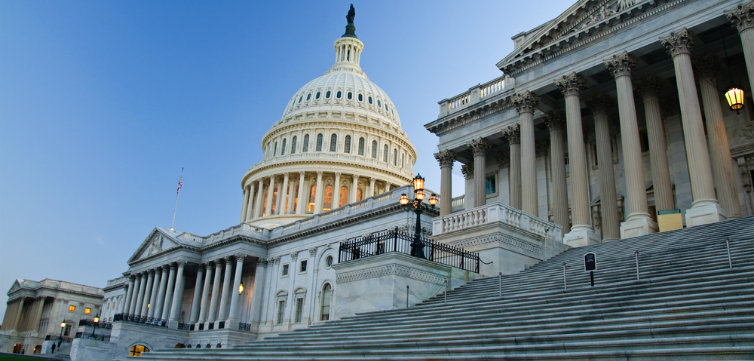
The Higher Education Act (HEA) was signed into law in 1965 by President Lyndon Johnson as part of his Great Society initiative. It is the basic federal law intended to increase accessibility to higher education by all. About 75% of all federal higher education student aid flows through HEA programs. Like most federal laws, Congress periodically will reauthorize the HEA and we are in the midst of the ninth reauthorization. While the major players in the House and Senate are publicly committed to reauthorizing the HEA this year, the question is, will they get the job done before or have to start over when the new Congress convenes next January

Background

A reauthorization makes some amendments to the HEA. Some are major and some are tweaks. For example, the 1992 amendments made students enrolled in distance education courses eligible for the first time to receive federal student aid loans and grants. The HEA has been reauthorized 1968, 1972, 1976, 1980, 1986, 1992, 1998, and 2008.

For the past several years, the Senate Health, Education, Labor, and Pensions (HELP) and the House Education and the Workforce (EdW) Committees have held hearings on a variety of higher education issues including regulatory simplification, streamlining the process for both applying and repaying student loans, and improving completion rates, transparency and institutional accountability, to name several areas of interest.

Where we are Today

The House of Representatives: Following multiple hearings over the past several years, in mid-December, on a party line vote of 23 Republicans against 17 Democrats, the EdW Committee adopted the Promoting Real Opportunity, Success, and Prosperity through Education Reform or PROSPER Act, a comprehensive update of the HEA. The bill reflects the views of the Committee’s GOP majority, led by Chairwoman Virginia Foxx (R-NC) and Chairman Brett Guthrie (R-KY) of the Subcommittee on Higher Education and Workforce Development who authored the legislation with little if any Democratic input. Reforms are significant because, according to the Committee’s summary of the PROSPER Act, the HEA “is no longer working for postsecondary students and “the American workforce faces a shortage of 6 million skilled workers.” Therefore, “Reforms must be made to assist students in completing an affordable higher education that will prepare them to enter the workforce with the skills they need to be successful.” The summary goes on to say that the PROSPER Act tackles these challenges by

  • Promoting innovation, access, and completion;
  • Simplifying and improving student aid;
  • Empowering students and families to make informed decisions; and
  • Ensuring strong accountability and a limited federal role.

Some of the of the bill’s changes include

  1. Eliminates the definition of credit hour, gainful employment, and borrower defense to repayment.
  2. Authorizes a College Dashboard with cost of attendance and estimated need-based aid,.
  3. Free Application for Federal Student Aid (FASFA) simplification.
  4. A $300 Pell Grant Bonus per academic year for increased workload.
  5. Establishes a single student loan program and eliminates all grant programs except Pell.
  6. Caps lifetime loans at $60,250 for independent undergraduates or $39,000 for dependent undergraduates.
  7. Reduces student loan repayment options to either a standard 10-year repayment, plan or a single income-based repayment plan.
  8. Eliminates Public Service Loan Forgiveness for new borrowers after June 30, 2019.
  9. Creates a pathway for federal student loan eligibility for competency based education programs.
  10. Institutes some institutional risk-sharing,

The next step in the legislative process for the PROSPER Act is consideration by the full House of Representatives. The process will include a “Manager’s Amendment” by Chairwoman Foxx proposing modifications to the Committee passed bill, likely a package of amendments spearheaded by the Committee’s top Democrat, Rep. Bobby Scott (D-VA), and some amendments from other Committee members as well. The latest word is that full House could take up the PROSPER Act in mid-March or early April.

The Senate: The House EdW Committee took the lead on HEA reauthorization in 2017 because the Senate HELP Committee was primarily focused on repeal and replacement of Obamacare. With that effort ended for now, HELP has stepped up its HEA reauthorization efforts and is now hard at work on reauthorization.

On February 1, 2018, HELP Committee Chairman Alexander (R-TN) released a GOP staff white paper on “Higher Education Accountability” providing an overview of current higher education accountability measures and consideration of some ideas for updating them. The goal, according to the paper, is to “Update the federal accountability measures for institutions of higher education to ensure that students are receiving an education worth their time and money” with the strategy to “Modernize and simplify the federal requirements for institutions of higher education to participate in the federal student loan program by creating more effective accountability measures focused on the repayment of federal student loans.”

Senate HELP Democrats quickly countered with a broader “Higher Education Act Reauthorization Principles

  • Make college more affordable and tackle the crushing burden of student loan debt. It is critical to address this massive challenge, which is the overwhelming concern of students and their families.
  • Make colleges more accountable to students and taxpayers by ensuring they are providing a quality education that leads to a real chance of getting a good job with a living wage and that allows families to afford to repay their student debt if they take out loans.
  • Make college more accessible to working families and the middle class. It shouldn’t just be the wealthy who are able to send their kids to four-year universities and who make it to graduation day. Instead, higher education should be truly inclusive, fully accessible for historically underrepresented students, reducing economic inequality, and providing a pathway to opportunity and success for all students.
  • Make higher education safer for all students. The scourge of campus sexual assault and violence is real and must be addressed, and the rights of students of color, women, students with disabilities, and LGBTQ students must be vigorously protected.

Like EdW, the HELP Committee also held a number of hearings over the past few years but stepped up its reauthorization focus over the last few months with hearings on simplifying the FASFA simplification in November 2017 and January 2018, a January 25 hearing on access and innovation, a January 30 hearing on accountability and risk sharing or skin-in-the-game, and a February 6 hearing on improving college affordability.

The HELP Committee has a history of bipartisan cooperation, made all the more important by its current make up of 12 GOP and 11 Democratic members. In a move perhaps foreshadowing more bipartisanship Chairman Alexander and Ranking Murray on February 13 issued an invitation with a February 23 submission deadline calling for comments or suggestions for the Committee’s consideration during reauthorization. Chairman Alexander has said to expect a reauthorization bill in “early spring.” While both Alexander and Ranking Member Murray have spoken about a bipartisan bill, it remains to be seen if that goal can be accomplished.

Will it Happen in 2018

 The conventional wisdom by the many of the “experts” in Washington, DC is that while the House may pass the PROSPER Act in the next month or two, there is simply not enough time between now and the mid-term elections in November for the Senate’s HELP Committee to write, debate and send a reauthorization bill for a vote by the full Senate and then go to a conference with the House to hammer out the differences between the PROSPER and whatever the Senate passes and pass that through both bodies. Moreover, if the Democrats believe they have a strong chance of taking back control of one or both houses of Congress after the election, they might choose to drag their feet on reauthorization in the belief that they can get a bill in the new Congress that tips more heavily toward their priorities. Time and the elections will tell.

If I were handicapping the outcome, I think the odds favor that reauthorization will not reach the President’s desk for signature by year’s end. But Senators Alexander and Murray are exceptional legislators with a history of working together and getting things done. It is hard to bet against them. It is also illuminating that the last HEA reauthorization passed and became law in an election year. Will the past prologue?


cropped-edu-alliance-logo-square1.jpgEdu Alliance is a higher education consultancy firm with offices in the United States and the United Arab Emirates. The founders and its advisory members have assisted higher education institutions on a variety of projects, and many have held senior positions in higher education in the United States and internationally.

Our specific mission is to assist universities, colleges and educational institutions to develop capacity and enhance their effectiveness.