
Dr. Badr Aboul-Ela and Julien Carter Appointed to Edu Alliance Advisory Council

April 2, 2018: Dean Hoke, Co-Founder of Edu Alliance and Managing Partner of North America announced two new members to the Advisory Council.

Badr Aboul Ela

Dr. M. Badr Aboul-Ela is Director for the Commission for Academic Accreditation (CAA), in the United Arab Emirates since 2007. He has served as a member of the Commission since it was established in 2000. He had a leading role in developing the UAE Standards for Licensure and Accreditation for post-secondary education. Dr. Badr is joining our advisory council as a director of Edu Alliance (USA). 

Dr. Aboul-Ela is a highly regarded expert in Middle East accreditation and institutional review. He participated in numerous institutional and program accreditation review teams in Oman, Bahrain, Saudi Arabia, Lebanon, Egypt, as well as the United Arab Emirates.

He chaired the External Institutional Review Team at Qassim University, Imam Mohamed Bin Saud University, Taiba University, Um AlQura University, and was a member of the Institutional Review Team at King Saud University and King Abdulaziz University.   Additionally, he chaired program review teams at Um AlQura University, Imam Mohamed Bin Saud University, and King Saud University.

As a researcher, he published a total of 103 articles in refereed journals. He won several research prizes and awards including the Egypt National Prize for Research, Abdel-Hamid Showman’s Prize, and Presidential Distinction Medal, for Excellence in Research.

Dr. Senthil Nathan Co-Founder of Edu Alliance states:  “Edu Alliance will benefit from his advisory services in all regions except for the UAE.  We will particularly benefit from his expertise in quality assurance and accreditation issues, challenges and opportunities in the MENA region.”
150205_15827_distinction03.jpg

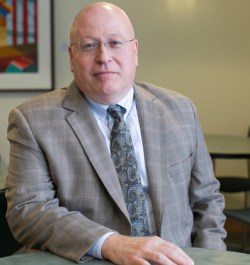
Julien Carter is the Vice President for Human Resources at Tufts University.  In this role he collaborates with the university community to ensure that human resource practices, policies, and systems at Tufts are aligned with institutional priorities, attuned to changing workplace demographics and supportive of individual employees.

Prior to Tufts, Mr. Carter served as the founding Vice President for Human Resources at Khalifa University, Chief Human Resource Officer at both the University of Texas at Austin, and the University of Louisville. In addition, he was the Commissioner of Employee Relations for the State of Minnesota in the cabinet of Governor Jesse Ventura.

His key skill is the assessment of organizational and employee priorities and development of thoughtful human capital, technology, and operational strategies to make the human resource function more effective and efficient. Throughout his career, he effectively collaborates with a variety of stakeholders in the development and advancement of human capital initiatives. Julien’s interactions often required a blending of his experience as a lawyer, teacher, mediator, consultant, and communicator.

Dean Hoke stated: “We currently have an outstanding group of advisors and  Edu Alliance is honored to have Dr. Badr and Julien Carter as our newest members. Their vast experience in higher education worldwide adds depth and expertise in international accreditation, institutional review, human resources and mediation.  The Edu Alliance partners Dr. Senthil Nathan, Dr. Chet Haskell, Nancy K. Hoke and myself look forward to their wise counsel and advice.”

What is the Edu Alliance Advisory Council?

The Advisory Council was founded in 2014 and consists of 14 members all involved in higher education. Members represent various areas in the field as well as geographically. Edu Alliance has found the Advisory Council a valuable resource and people we can turn to for consulting projects when appropriate

  • The Council consist of quality professionals from colleges and universities who have worked in the field and understands the day-to-day challenges of senior higher education officers.
  • They serve as senior consultants and help guide the activities of Edu Alliance.
  • Advisors bring their breadth of knowledge and experience gained through years of professional involvement of knowledge of the United States and as well as internationally.
  • The Advisory Council acts as advocates and consultants for the firm with institutions, friends, and colleagues.

What are the responsibilities of an Advisory Council Member?

  • Serve in an advisory capacity, individually and as part of a council, to further the mission of the alliance and to counsel and support the founding partners.
  • Serve as an advocate for Edu Alliance.
  • Members serve as keynote speakers, panelist, and moderators at higher education conferences worldwide.
cropped-edu-alliance-logo-square1.jpg

Edu Alliance is a higher education consultancy firm with offices in the United States and the United Arab Emirates. The founders and its advisory members have assisted higher education institutions on a variety of projects, and many have held senior positions in higher education in the United States and internationally.

Our specific mission is to assist universities, colleges, and educational institutions to develop capacity and enhance their effectiveness.

 

The Importance of Recruitment of Faculty & Key Staff for Small Colleges

Allen MeadorsBy Dr. Allen Meadors, Chancellor Emeritus of the University of North Carolina-Pembroke and a member of the Edu Alliance Advisory Council. Dr. Meadors has been engaged in a number of college and university searches throughout his career.

As higher education institutions and systems roll into 2018, the framework of higher education continues to be faced with financial restrictions, reductions, and unexpected costs. Continuous declining public and private funding are forcing college and universities (especially smaller ones) to make “tough choices” in cutting faculty, staff, maintenance, degree programs, and student services to name a few as a means to preserve its core missions. Higher education is “scrambling” to divert limited resources and attention to fundraising, campus/student/faculty security, online enrollment and various outreach degree programs.

In our business of educating students, the “soul” of our operation is our faculty and key staff. The popular saying from a few decades ago “It takes a village to raise a child” can be easily adjusted to say “It takes an entire faculty and staff to educate a college student.” This is true whether we are talking about educating students in the traditional on-campus fashion, online, or through some other mode.

The above is true for well-funded institutions, but for small and/or underfunded institutions the challenges are institutional “life” threatening. Where large and/or well-funded institutions can have multiple layers of staffing to handle various pieces of the institution’s many professional obligations. A small and/or underfunded institution may only have one or two or even have to have an individual cover what 3-4 individuals might at another institution.

The media often focus on student recruitment as the key for success in higher education. Without question, we would not exist without adequate numbers of students. Institutions regardless of size or financial condition must always be analyzing what it’s mission is and what type of student fits that mission. However, like in any business, those who do the work at the institution are the key. How do you even begin to define your niche in higher education without first identifying what your institution’s strengths and challenges are? At a small institution, these are the most critical questions you will need to answer. Who are we? What are we? In a time of declining resources, we must know who we are as an institution and where we want to go. Of course, this all starts with our current and projected faculty and staff.

All institutions in higher education, like to believe that they are “student-oriented” but at small “at risk” institutions, it is critical that this message is extremely clear. In recruiting faculty and staff, at these institutions, we must seek individuals who see student engagement as the center of the educational experience. Often, we will ask faculty at these institutions to handle significant teaching loads. We cannot afford to hire faculty that sees teaching as something they “have to do” to be able to have the time to spend on scholarly/research projects. We need faculty who can see their classroom activities as part of their scholarly/research platform. Individuals who can enhance their scholarly/research agenda via their classroom involvement?

John Collins’ quote from Good to Great “Get the right people on the bus, the wrong people off the bus, and the right people in the right seats” is the key for small higher education institutions surviving. The right people understand the mission of the institution and aligns with the institution’s values and goals.

As important as this alignment is for faculty, it is equally as important for the academic administration. They must all be on the same page. In a small institution, no one has the luxury of just having one job. Everyone must be moving in the same direction and sharing the same vision and values. We, often, talk of the passion that educators have for their profession. This is not always true, especially in larger organizations where many see their position as “just a job.”   In large, organizations, with multiple layers, this can occur, and the institution can move along smoothly. However, in a small institution, it is important that every person has a real passion for their work and the goals of the institution.

Small institutions must spend an inordinate amount of time on ensuring they recruit and retain individuals who can align with the institution vision and goals. It doesn’t matter if an institution does their own recruiting or uses a search firm. The campus leadership must be sure that the individuals hired by the institution are the “right” people.

We all want to make a good living for ourselves and our families, but one of the amazing things about many individuals who chose to work in higher education is that their passion to serve and share is their driving force not just the amount of their income. A small institution must seek out these passionate and committed individuals and let them know your institution shares their passion.

We have seen individuals (both faculty and staff) leave higher paying positions to work for an institution that demonstrates its passion for “student engagement.” It may take longer to find these individuals, but it will be well worth it.


Dr. Allen Meadors article “the Importance of Recruitment of Faculty and Key Staff for Small Colleges” is a part of the “Things That Keep Higher Education Leaders Awake at Night” series by Edu Alliance. We thank Allen as well as our Partners, Advisors and Friends for their valuable contributions and insights.

cropped-edu-alliance-logo-square1.jpgEdu Alliance is a higher education consultancy firm with offices in the United States and the United Arab Emirates. The founders and its advisory members have assisted higher education institutions on a variety of projects, and many have held senior positions in higher education in the United States and internationally.

Our specific mission is to assist universities, colleges and educational institutions to develop capacity and enhance their effectiveness.